The Brutality Of Burnout
burnout is fucking intense
Burnout is fucking intense, people. I’ve tried to write this article at least once a week for three months and I’m finally feeling well enough to sit down and string a few sentences together so let’s get into it.
Recently, I realised that I was not coping. Work was overwhelming. My colleagues had become villains. Every day at work was a war with everybody at work. Nobody could do their jobs right in my eyes. Only I was correct. My partner was an asshole. Everybody was out to get me, and the world was never going to be okay.
Now, this is obviously not the case. Well, sure, some of the people at work are assholes and incapable of doing a good job but I don’t work with any of them directly. My immediate colleagues are fun, talented and smart people that I really get along with.
My partner isn’t an asshole, she’s the only person who puts up with my bullshit day after day for over 20 years now.
Work isn’t a war zone and nobody is out to get me.
All of these feelings stem from one thing… burnout.
the slow march towards burnout
In July I realised that everything was more difficult than it needed to be. When I say everything, I mean everything; what I wanted to eat, what I wanted to wear, when I wanted to shower and every other decision became torture. Reading work documents would take an infuriatingly long time and when I was done I couldn’t remember what I’d just read. At one point, my partner was talking to me about what I wanted to eat for dinner, and I was so incapable of giving her an answer that it overwhelmed me and I started to cry! I’m 41 years old. Crying about dinner is not OK.
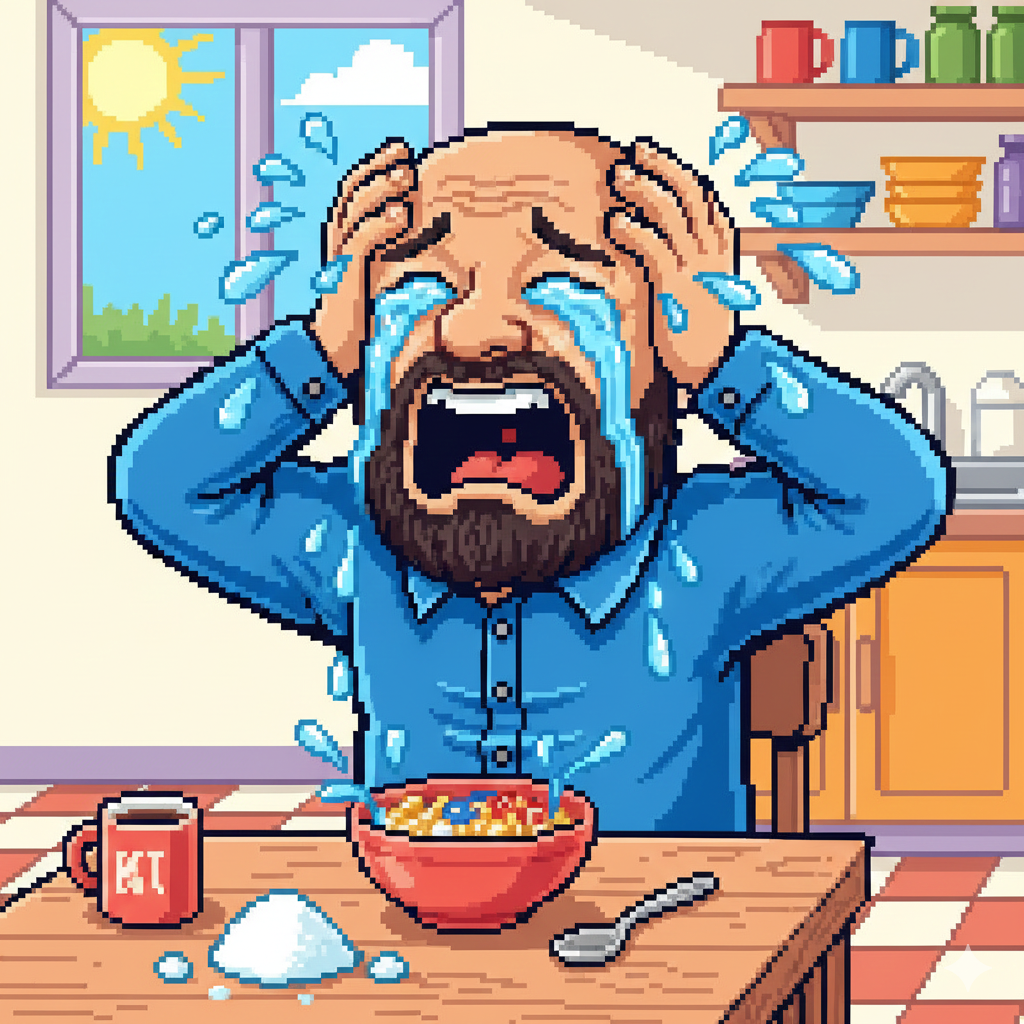
Engaging with colleagues that I like and respect became impossible. Meetings were basically meaningless. Thinking with any depth was impossible. Walking was aimless. Sitting through a 30 minute TV series was a behemoth task. Everything was difficult and I didn’t recognise myself anymore.
Then in August I was sitting in a fairly mundane meeting with someone junior to me who was being more intense than they needed to be and instead of shutting them down and controlling the meeting, I felt tears welling up. I stopped talking, composed myself as best as possible and ended the meeting. In more than 20 years of working in a professional setting this is the first time that I have ever come close to crying in a meeting.
I’ve been on burnout leave for three month and now that I am starting to feel like myself again I can see that over the past 12 months I have been on a march towards burnout. Burnout feels different to everyone as far as I can tell but there are signs that you might recognise so let me list some of the triggers that let me know I was all sorts of fucked up:
My favourite colleagues (friends) became villains.
Work became a battleground every single day, no exceptions.
Joy was nowhere to be found.
Weed smoking increased steadily (escapism) after hours.
No life outside of work.
Unable to focus on anything.
Disinterested in anything that usually interests me greatly.
Disinterested in socialising with anyone.
Stopped all hobbies.
Unable to finish one book for the past 8 months (I usually read two books per month at least).
Constantly checking social media (significantly more than usual).
Felt helpless and like a victim at work and in my personal life.
Lashing out at my partner (you hurt the ones you love).
Motivation at zero.
why this burnout blindsided me
I usually have a healthy separation between my self-worth and the work that I do. I know that it’s OK to stop working at 5pm and pick it up again at 9am the next day. I worked this way for 2 years at work but this is the first job I’ve had in nearly 20 years.
Thanks to my new therapist I have come to understand that my coping mechanisms are not tailored towards being at a corporate job. I’ve been an entrepreneur for so long that my social skills and tools are all fine-tuned to solve problems that entrepreneurs have. I was unprepared for the corporate impact on my mental health. For the first 20 years of my career I set the rules and built my own businesses. As a result of this autonomy, I armed myself with the appropriate tools to manage that kind of stress.
There are a lot of opposing views surrounding burnout. Some of my closest friends don’t really understand it and some outright don’t think it exists or can’t relate to my experience in any way. To be honest, I felt exactly like this before I experienced burnout for myself. The friends closest to me have been supportive and engaged in the topic to gain a better understanding.
There are famous indie hackers on X who tell people that if they’re not fighting in war zones then they can’t possibly experience burnout. It isn’t that simple, obviously.
My best friends have pointed out that I have been in worse situations in my career that have presented significantly more stress, more work, longer hours, more pain, more turmoil and I got through those situations without experiencing burnout so this burnout thing is confusing.
the Dutch safety net (and my identity problem)
Since I live in Amsterdam I am fortunate to be protected by the very generous Dutch laws surrounding burnout. The Dutch treat burnout as an illness. When I told my immediate manager (a Dutch woman fortunately) that I was burned out she immediately sent me home. That was three months ago.
Dutch law allows for employees to go on burnout leave with full pay for the first year if need be and up to 75% pay for the second year if things are that bad. Things aren’t that bad for me. This particular ruling is an incredible tool in helping battle burnout because you don’t have the stress of losing your salary rolling around not-so-quietly in the back of your mind.
Globally it’s pretty well known that South Africans understand how to work hard. We are a nation of grinders. I am no different. Over the past three months I have learned that in large part I value myself by my output. I only feel like I have had a good day if I have done something, created something, moved something forward. If none of these things happen then my day feels wasted and I feel like a loser. I’ve never thought about my self-worth in this way because I’ve never had to stop creating, building or producing. I write this newsletter, I post on LinkedIn, I engage on X, I am learning Dutch (and reacquainting myself with Greek), I am learning how to make electronic music, exercising daily when I can, showing up at work and smashing Jira tickets with my team, writing keynotes and getting shit done. That’s my entire life in one form or another from as young as I can remember.
GO. GO. GO. Until it became GO. GO.. Go… Go… go…. go…..g…. g…… o…… o….. oh…. oh…. uh oh.
Suffering through this over the past 90 days has felt like going back ten years in my mental fortitude. I started seeing a therapist about a decade ago to improve my mental strength but burnout took me back to pre-therapy Nic almost instantly. The march back to normalcy has been slow, confusing, intense, disruptive, difficult and painful.
what burnout was not
Initially I thought I was just in a slump. Last year my one of my dogs passed away unexpectedly on the morning of my 40th birthday. Then in June this year, the other best four-legged buddy of 13 years passed away from complications related to dementia so I chalked the feelings I was experiencing down to some kind of prolonged grief.
It was not grief.
Then I thought that maybe I was doing too many things and not resting enough so I stopped building side projects, stopped staying up late and focused only on my 9-5 job.
I was not working too hard.
Then I thought maybe I was pushing too hard on the exercising front so I paired that back to a couple of days per week instead of five.
I was not exercising too hard.
Burnout often presents itself as exhaustion which we interpret as “working too hard” but this is very rarely the root cause.
three weeks as a shell
Let me try to explain how I felt on burnout leave before I explain how I think I ended up here at all.
After meeting with my manager on a Wednesday in August to tell her I was burned out I cycled home in a bit of daze. I was told to close my laptop, delete slack from my phone and stop checking emails. My team was not allowed to talk to me about work or contact me at all for anything work related.
Those first few days were entirely overwhelming to me for many reasons. I’ve never sat still in my life since I was ten years old and had nothing to do, nothing to move towards, nothing to work on, nothing to focus on, nothing to drive me forward. I’ve never been forced to sit with my thoughts and be alone for a prolonged period of time. I’ve very rarely woken up in the morning with no goals and burnout leave forces you into all of those positions.
This is done intentionally. The Dutch seem to have figured out that the more you are able to do nothing, the more you are able to recover. Your brain has been twisted and mangled from what it was into this depressed, confused, sad, burned out shell of yourself and the way to unfuck your brain is to do nothing for as long as it takes.
The first three weeks I was exactly that. A shell of myself. Meek and weak, disinterested, disengaged, unfocused, unreliable, emotional, emotionally unregulated, and a very unstable. That time was spent wanting to do things but incapable of doing anything. I would sit down at my desk to try and play my guitar, strum a chord, and just stop. I would then shift my attention to the TV and think, “Oh, amazing! It’s the perfect opportunity to watch this movie that I wanted to watch for a while.” Put the movie on, and five minutes later, completely disinterested, switched off the TV, and stared at an empty wall. That went on for weeks, the cycle of wanting to do something but incapable of doing anything.
slowly rebuilding myself
After the first three weeks of turmoil and torture in my brain, I started to understand that taking control of anything, the smallest thing and looking at the problem, facing it was the only way to get through this experience.
I found myself a new therapist and booked five sessions. I say I found myself a new therapist like it was easy, but it wasn’t. It took me days and days of trying to focus, trying to find someone, trying to bring myself towards this thing that was going to help me, but being unmotivated and unable to open up a website and browse therapists to book. If you’re looking for someone, I highly recommend using It’s Complicated.
So after the three weeks of my brain being broken, I was finally out of the darkest cloud and able to understand that the only way to get better is to slowly and carefully rebuild the things that were broken. For me, some of the (many) things that were broken included:
My ability to focus.
My ability to find value in things that were unrelated to work.
Finding joy in anything or simple things like cooking and eating.
My ability to make simple, basic choices.
I began to take control of things that I felt I was able to take control of.
First, I continued exercising. Exercising is the only thing that I’ve managed to consistently do for the last three months while on burnout leave. Whenever I felt like I didn’t know what to do, I would exercise! Do some push-ups, pull-ups, swing a kettle bell, step on my elliptical machine, just make sure that my body was moving as much as it could.
Then I decided that I needed a routine, so I built myself one:
Waking up at a reasonable time (8:00).
Having coffee in bed.
Reading my book in bed for 5 minutes (that’s what I could cope with).
Getting out into the world.
That was it. That was all the routine I could cope with.
When you stay at home for three weeks, every day you start to believe that the world consists solely of your home. So, I would force myself to go for an hour walk in the beginning with my phone listening to something, but as I got better, I decided to leave my phone at home and go for the hour walk without my phone and just be with my thoughts, which is brutal if you are anything like me.
Eventually, over the following three weeks my focus and attention increased. My ability to make decisions increased. My interest in my hobbies came back and I started to cook again, play guitar again, read again, do things around the house like paint and clean, get dressed and go out in the morning. I started feeling like I was able to talk to people without bursting into tears. I started having very short coffee catch-ups with friends and started to talk to people a bit more broadly about what I was going through and what it felt like.
the part I still struggle with
The one thing that has been consistently difficult for me to get control of is regulating my emotions. This seems to be a much deeper problem for me that I’m working on with my therapist.
Part of that is talking about it in this article. My inability to verbalise vulnerability and my experience of vulnerability is hampering my recovery but also holding me back more broadly in life. It’s hampering my relationships with people close to me. It’s hampering my ability to communicate and interpret the world because I am unwilling to be vulnerable, honest and open with people, whether at work or in my personal life, about how I’m feeling, what my emotions are like, and how they should deal with me.
This is a biiiig one for me and something I’ll probably focus on in 2026 as my word of the year: Vulnerability.
the three-month turning point
It has been three months since I stepped away from work. Having spoken to a few more people who are also going through this Dutch burnout recovery process, it seems to be the three-month mark that is the turning point.
It seems like I needed one month to decompress and unravel the mess of burnout, the second month to wallow in the experience of what it’s like to not be at work, to not have these demands, and then the third month to try and find myself again.
how I actually burned out: agency
Finally, I want to talk about how I ended up where I am right now.
I’m no stranger to stress. I’m no stranger to hard work. I’ve spent more than 20 years building businesses and doing hard things, but one year working on a single project completely railroaded my mental health.
If I could sum up how I burned out with one concept, that concept would be agency. It’s an oversimplification or misunderstanding of burnout to think that burnout is the result of working too hard. It is not.
I was hired as an entrepreneur to be entrepreneurial inside of an established organisation. To take control, make decisions and move a beleaguered project forward. For the first two years, I was allowed to be that entrepreneur. I was instructed to act as a “benevolent dictator” and was given almost complete freedom to make decisions, take control, define deadlines, work with my team on what we believed needed to be worked on and to make the best product that we could.
After two years running a very successful project, I was then given a new priority project (on top of the existing priority project) in November of 2024. But I was given no agency, no control, no decision-making power. I had multiple senior (and some junior) colleagues telling me what to do and how do it at every possible opportunity and often these instructions were at odds with one another. I was forced into multiple reporting sessions, multiple check-in sessions and multiple alignment sessions per week!
My work was about the work around the work, not the actual work of delivering value to our customers and seeing them thrive. My job basically became alignment of deadlines and goals that other people set. And while I was responsible for everything, I had no control over anything in this particular project. Every decision needed someone else’s approval because the project was such a priority.
Over a period of twelve months, my team size was cut dramatically, but the workload increased almost in lock step with the team shrinking.
I have spent 20 years building up tools and coping mechanisms for being in control, for when I am the CEO, for when I am making decisions, for when I am the one with the power. I was ill-equipped for the corporate struggle, for the politics, for the alignment, for the work around the work. Becoming an employee for the first time since I was 20 years old required different tools and coping mechanisms that I simply did not have at my disposal. The first two years were great because I was asked to and allowed to act like an entrepreneur within a corporate. The last twelve months were brutal because I was treated like an inexperienced employee who had not spent 20 years building products and businesses.
As a result of being treated this way for twelve months, I became weary of my abilities. I second-guessed my decisions and I became less and less like myself in the workplace. As a result of that, people would second-guess me and would force me to align more. It’s a vicious cycle that drove me down into the world of burnout without noticing until it was too late and I was broken.
going back, and what you should do next
I go back to work in a week and I can sense it’s time. My brain is fidgety and my mind is starting to crave a challenge. I’m excited to get back to being myself but with a new set of tools to add to the old set I’ve been using for so long.
Before this happened to me, I honestly didn’t take burnout seriously. I maybe understood that some people experienced it, and I think that I understood that it was real for some people, but without knowing what this feels like, you really can’t give it the weight that it deserves.
In the simplest of terms, it feels like somebody took a tablespoon and stirred my brain!
If you feel like you hate your colleagues who you used to love, if you find no value in your hobbies, if you find no joy in the things that once gave you joy, if you’re lashing out and snapping at the people who care about you the most, and if you just feel like you’ve had enough with literally everything, then maybe things aren’t all that terrible, you’re just burned out.
You owe it to yourself, your friends, your family, your colleagues, and your future to speak up and own this experience because it is not something to be embarrassed about. I did not burn myself out. I contributed by not standing up for myself more, but it’s the structures that were put in place around me that put me in this position. And it’s probably the same for you.
If anything that you’ve read above resonates, then you need to speak up and get the help that you deserve.